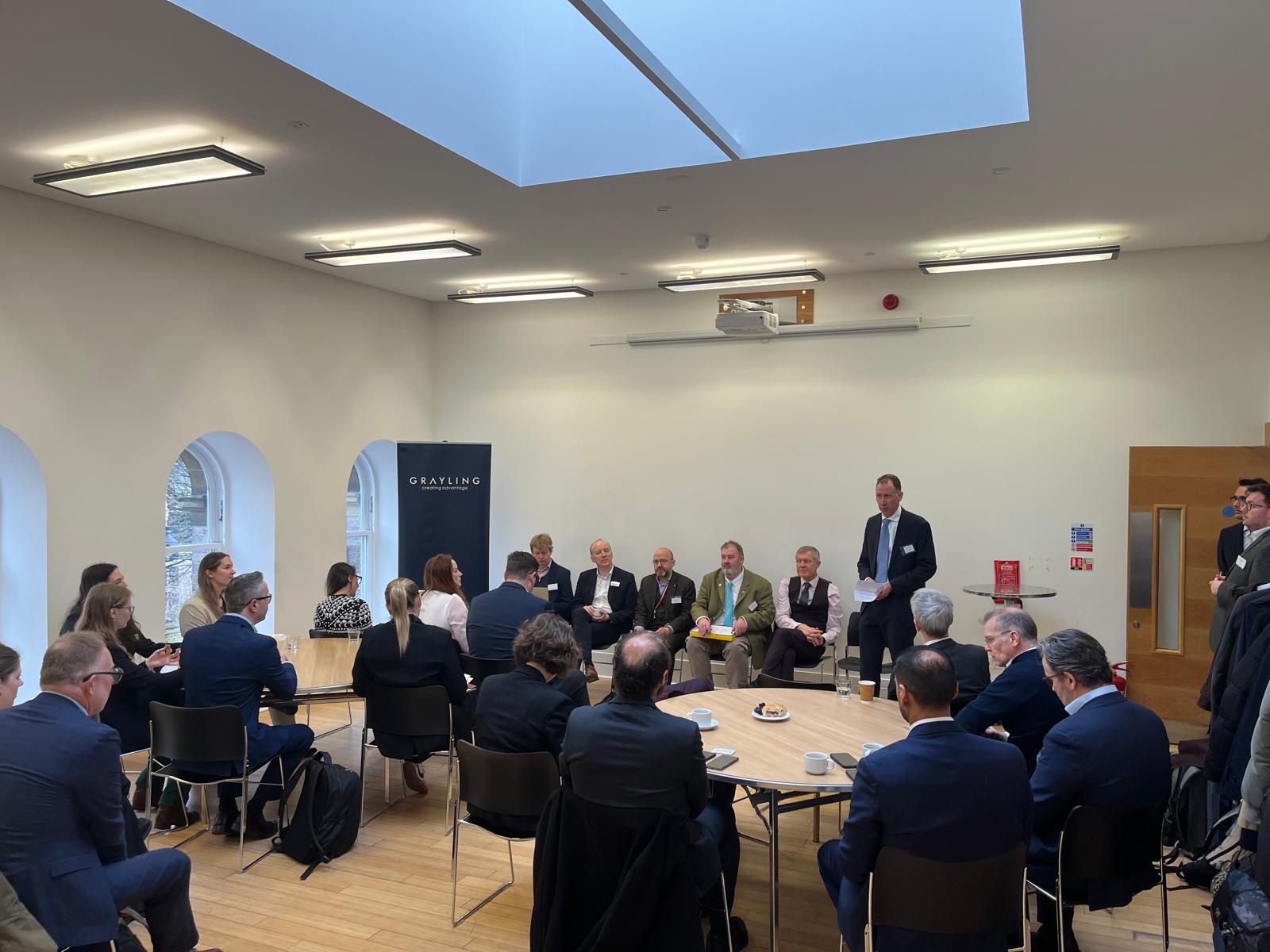











Few industrial sectors can have become more politicised than energy and, as we run up to the Scottish Parliament election in May, it’s understandably a hot topic. Last week, Grayling brought together a panel of parliamentarians and candidates to debate the issue at a special invite-only hustings with an audience drawn from across the energy sector.
Grayling’s specialist energy unit recently carried out a survey to better gauge the public’s views of energy issues. Our Power, Perception and Progress Report found that devolution and infrastructure had historically created confidence, with strong support for local control - especially around jobs. Some 21% of those in Scotland believe they will benefit from the transition and there was support in Scotland for offshore wind and jobs. However, that support remains conditional: benefits must be visible, locally retained, and politically relevant.
The Grayling hustings brought together Michael Marra MSP from the Labour Party, Patrick Harvie MSP from the Scottish Green Party, Willie Rennie MSP from the Lib Dems and two candidates – Reform’s Kenneth Morton and the SNP’s David Barratt. All of them were asked to outline their vision for the energy sector, before going on to discuss climate change.
From the debate a few key themes emerged. Firstly, there is a consensus that energy policy needs to create jobs and bring communities with it. There was broad recognition that without employment, community benefit and business opportunities in Scotland, support for renewable energy and energy infrastructure will wane. Secondly, there is a need to look beyond electricity – hydrogen, chemicals, ammonia and other products and by-products all need to be considered as part of a wider energy and industrial strategy. Thirdly, the Just Transition has to be real. Many communities, particularly in former oil and gas and refining communities, are at the sharp end of the energy transition and do not feel that the jobs and support are there. Finally, climate change remains a real threat but more needs to be done to explain to the public what the impacts of climate change could be.
Energy will continue to play an important role in this election. It may not be a defining issue Scotland-wide, but in key regions, such as North East Scotland, it could be decisive.
by Ross Laird, Head of Scotland, Grayling