








In a world of political podcasts, viral clips, sixty-second news interviews and selfie videos, the power of a political speech might be seen as less relevant. But as this year’s nominees for the Pagefield Award for Political Speech of the Year show, a good speech still has the power to capture an audience, present a problem, and inspire action.
All the speeches this year show the continuing importance of language, writing, and delivery in shaping conversation, influencing opinion or defining a moment in public life.
With every political speech, there are two audiences: the people in the room, and voters everywhere. Each nominee has their own style and content, but all spoke to both audiences, with clips and in some cases whole speeches covered in the media and watched online.
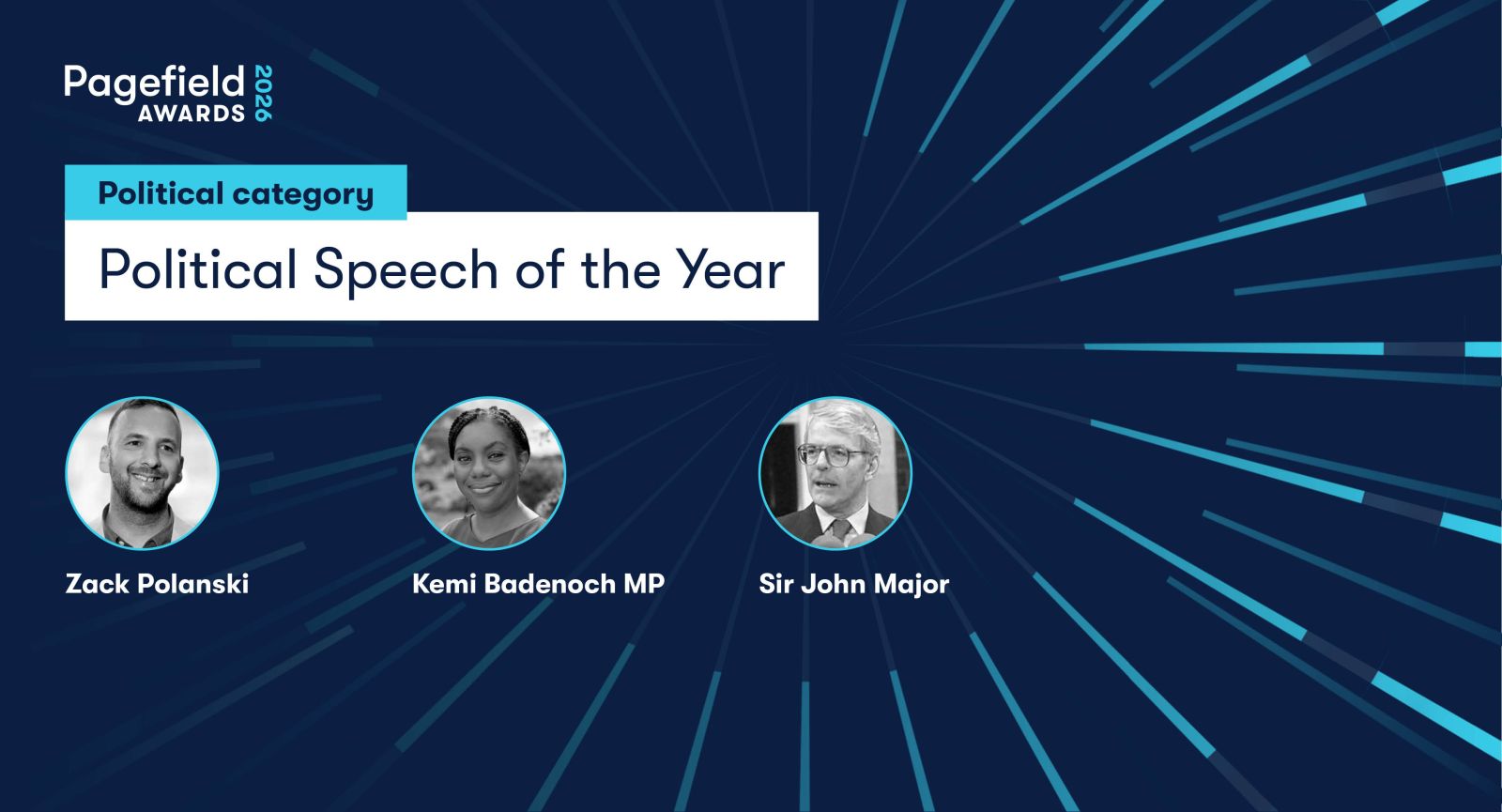
This year’s nominees are:
Zack Polanski AM
For his speech after winning the leadership of the Green Party. The moment was a successful call to arms that played a significant role in the party’s subsequent membership surge. It marked a key moment in a new multiparty political era, combining popular themes with a clear statement of his mission: “We are not here to be disappointed by you. We are not here to be concerned by you. We’re here to replace you.”
Kemi Badenoch MP
For her speech at Conservative Party Conference, widely expected to be a make-or-break moment for her career as leader. Expectations among some commentators were low, but her passion and clarity delivered a strong performance and marked a turning point for both her leadership within the party and her public profile.
Sir John Major
For his Attlee Foundation Lecture in March 2026. The speech may not have attracted much attention outside Westminster, but within the bubble it was seen as a wake-up call to the political class about the need to take the defence of liberal democracy more seriously.
The winner will be announced as part of the Pagefield Awards 2026 on 15th June.