











I find it increasingly difficult to listen to discussions about the pressures on health systems without asking why we are so willing to accept the decisions that put them under that pressure. Governments choose how to spend, which industries to support, which alliances to protect and which wars to enable. Those choices determine pretty much how we live day to day.
I struggle with the suggestion that we simply cannot afford to do better. The money exists, but its allocation reflects political priorities that too often expose people to preventable harm while weakening the services expected to protect them. Describing the consequences as a funding gap allows the decisions behind that gap to escape scrutiny.
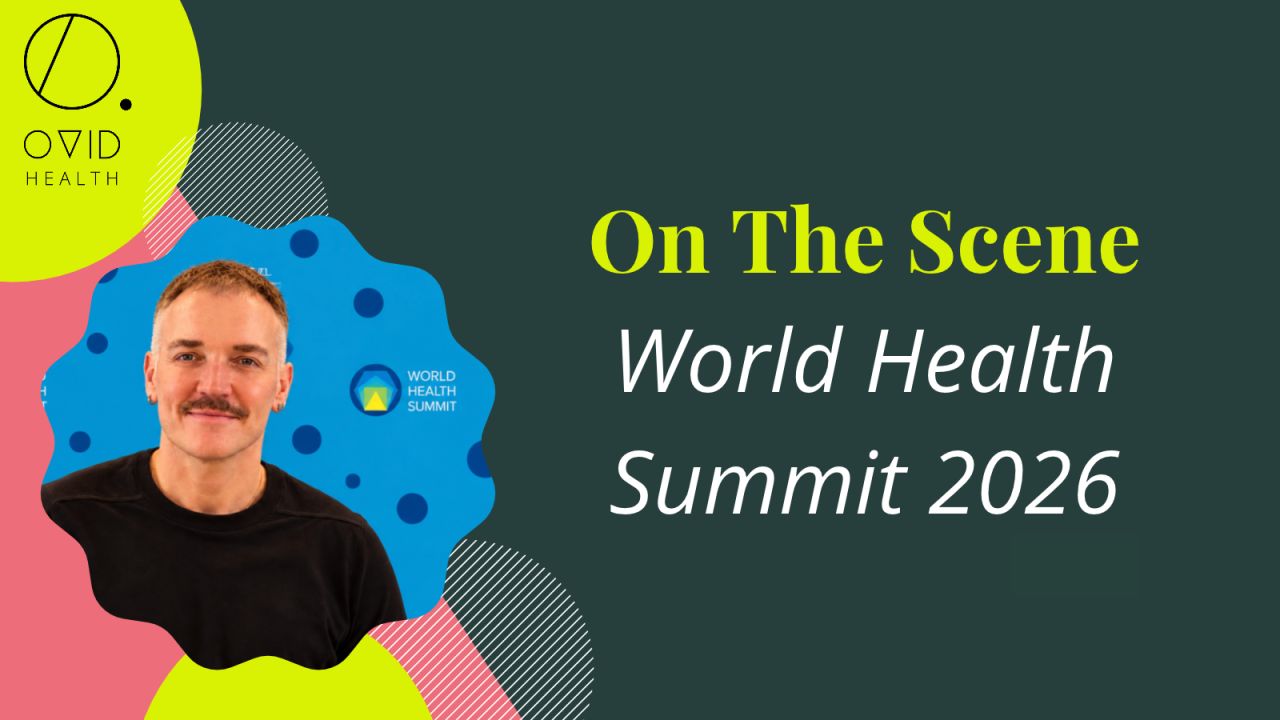 This year’s World Health Summit in Berlin took “From Crisis to Resilience” as its theme. I understand the ambition. Yet, I kept asking myself who is being asked to become resilient, to what, and at whose expense. Resilience becomes an unreasonable demand when communities are expected to absorb the consequences of decisions they had no part in making. Health services cannot indefinitely compensate for violence, disinvestment and the destruction of the infrastructure on which care depends.
There were people in Berlin whose expertise and commitment I respect enormously. The discussions on child survival, outbreak response and primary healthcare demonstrated how much we already know about improving health, which made the distance between that knowledge and our willingness to act on it all the more frustrating.
In a conversation we recorded at the summit, Corazon Aquino of Amref Health Africa put it plainly: “Africa knows what it needs, how it needs it, and the priorities are already set.” Her point presents a practical challenge to the way international support is organised. If priorities are already established, why do so many partnerships still leave external institutions with such considerable authority over what gets funded, how success is defined and who must answer to whom?
The discussions about African health sovereignty gave these questions a wider geopolitical significance. Africa CDC's emphasis on domestic financing, local manufacturing and control over data concerns the practical ability of countries to act. Dependence on external supplies, money and expertise constrains their choices in a crisis, and international partners need to accept that stronger local institutions may also mean less outside influence.
That cannot become an excuse to withdraw support. Building autonomy requires sustained investment, predictable relationships and a willingness to transfer authority. Calls for self-reliance ring hollow when they accompany decisions that make the transition harder.
Ultimately, these arrangements have to be judged by whether people receive the care they need. During a discussion on outbreak response, Médecins Sans Frontières (MSF)’s Javid Abdelmoneim argued that patients measure preparedness by whether treatment is available. I appreciated the clarity of that intervention in a conversation that could easily have remained at the level of frameworks, platforms and commitments.
I worked for MSF in Bukavu, eastern DRC, during Ebola and COVID-19, where the relationship between security and access to care was part of the daily working environment. A response depends on staff being able to move, supplies reaching facilities and patients being able to make a journey safely. Conflict undermines those conditions long before an outbreak begins.
Speaking about eastern DRC, Javid also questioned diplomatic efforts that prioritise access to natural resources while leaving civilians exposed to violence. His argument deserves much greater scrutiny: how are we judging the success of negotiations if people still cannot safely reach a clinic?
Health expertise belongs at those negotiating tables. Civilian safety, humanitarian access and the protection of healthcare should be obligations against which agreements are judged. Otherwise, health workers and communities are left to manage the consequences of arrangements made around other interests.
It was against that background that I found the limited attention to #Gaza particularly difficult to accept. I could not attend every session at the summit, and Gaza appeared in the wider programme and in the Academic Alliance’s pre-summit declaration. But in the rooms I attended, I heard it mentioned once, by a moderator who then acknowledged the difficulty of discussing it in Germany. The audience response was muted.
Germany’s history and political sensitivities form part of the context, but a global health gathering has to be able to discuss the destruction of healthcare and civilian suffering openly, wherever it takes place. At a summit organised around crisis and resilience, how could the devastation of Gaza’s health system receive so little attention in the discussions I heard?
The same scrutiny should extend to attacks on healthcare in southern Lebanon and the West Bank. Political alliances influence which emergencies receive sustained attention and which become difficult to name. The limited space given to Palestinian suffering also makes me question the role of dehumanisation of certain groups in determining what is considered politically discussable. A commitment to universal access to care requires consistent recognition of the humanity of those denied it.
Healthcare workers are also witnesses, whose clinical records and testimony can help investigators establish injuries and patterns of violence. Protecting them, and preserving the evidence they produce, matters to the possibility of justice. For me, accountability belongs within the conversation about protecting healthcare, including when it is uncomfortable for governments represented in the room.
This question of institutional consistency also informed how I understood the Wellcome Trust session on trust in science. It connected public confidence with people’s experiences of healthcare and institutions: whether science benefits them, whether services are accessible and whether the wider system appears to work for them.
That matters to me as someone working in communications. We should be careful about treating distrust as a problem that better explanations alone can resolve. People may have sound reasons to challenge institutions, particularly when the principles those institutions defend appear to be applied selectively. Our work should help institutions understand and respond to those experiences.
I wanted that same willingness to question assumptions in the discussions about #AI, which I found increasingly exhausting. After three days, I had heard it invoked so often that I sometimes struggled to understand what a speaker actually meant by it. Which technology, addressing which problem, with what evidence, and under whose control? Too often, those questions went unanswered as the conversation moved on to another expression of enthusiasm or scepticism. Saying “AI” cannot be enough to establish that a proposal is useful, credible or deserving of resources.
I was particularly concerned by how easily that enthusiasm coexisted with less discussion of the power behind these technologies. Who owns them? Who controls the data? What dependence are health systems entering into, and what happens when a company changes its prices, terms or priorities?
These are familiar questions in global health, especially for countries working to gain greater control over their medicines, financing and infrastructure. We should recognise their relevance before building new dependencies. The Lancet Group work presented in Berlin also placed the destructive risks of AI within a wider assessment of threats to health. I wanted to hear more about malicious use, accountability and the ability of public institutions to govern technologies being developed by powerful private companies.
#Climate change demands equally serious political engagement. I find it difficult to listen to appeals for health-system resilience without asking why governments continue to make energy and investment decisions that increase the pressures those systems will face. Communities are expected to adapt while having little influence over the policies driving their exposure. Adaptation funding matters enormously, but so does confronting the interests that keep increasing the need for it.
Across these discussions, I kept returning to responsibility. We have considerable knowledge of how to protect human life, alongside resources that could be allocated very differently. Decisions about whose safety takes precedence, which harms are tolerated and whose voice carries authority deserve much closer examination.
We are already living with the consequences of political priorities too often set without a meaningful say from the people affected. We are entitled to challenge those choices, and to expect those of us with access to these rooms to do the same.
by Davide Scalenghe, Head of Global Strategy & Partnerships at OVID Health